Pixel
Fri 03 September 2010 | 10:39
TURKEY
Turkish, Swiss foreign ministers discuss minaret ban

Thu 03 December 2009 | 13:16 GMT Text size:

4847
Ahmet Davutoglu and Micheline Calmy-Rey

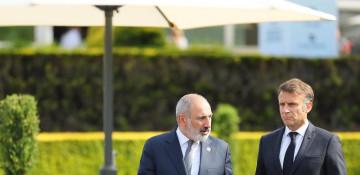
The Turkish and Swiss foreign ministers have held talks on how to contain growing global protest at the referendum to ban new minarets in Switzerland.

Ahmet Davutoglu and Micheline Calmy-Rey discussed a new referendum to reverse the ban as an option to ease tensions simmering in the aftermath of the weekend vote. Speaking on Wednesday to reporters in Athens, where he attended a meeting of the Organization for Security and Cooperation in Europe (OSCE), Davutoglu said he had told Calmy-Rey that the referendum could spark a crisis similar to the one that erupted following the 2006 publication of caricatures in Denmark insulting the Prophet Muhammad.

“Unless timely measures are taken, the issue could snowball instantly and turn into a global crisis,” Davutoglu told Calmy-Rey when they met on Tuesday afternoon.

He told reporters that Calmy-Rey was aware of how important the issue was and added that he sensed that the Swiss minister was ready to take measures to address the situation. When holding a new referendum on the ban was discussed, Calmy-Rey did not rule it out, saying such options were available. A new referendum requires 100,000 signatures demanding a new public vote to reverse the ban.

The proposal to reverse the ban with a new referendum has supporters among the European Greens as well. In remarks to Swiss state television on Tuesday night, European Greens co-chair Daniel Cohn-Bendit said that a referendum to reverse the decision should be held in one year’s time.

The minaret ban is a slap in the face to Muslims, and the issue should be taken to the polls again in a year, he said. “Democracy doesn’t always come up with the right answer. During World War II the vast majority of Germans were opposed to Jews,” he added.

Speaking to Today’s Zaman on the margins of the OSCE gathering on Tuesday, Calmy-Rey said her government did not back the ban. She said she was herself shocked by the referendum result, in which 57.5 percent voted in favour of the minaret ban, but added that this should not be interpreted as a sign of anti-Muslim sentiment in her society.

The foreign minister said the tension could be attributed to the global financial crisis and the ensuing financial difficulties people were facing. “We must increase dialogue to get to know one another better, and to learn more about each other’s culture. We need to do this not just with Muslims, but with other religious communities as well,” she said, noting that there were 400,000 well-integrated Muslims living in Switzerland who were able to perform their religious duties without any problem.

Swiss voters adopted the ban in a referendum on Sunday, defying the government and parliament, which had rejected the right-wing initiative as violating the Swiss constitution, freedom of religion and a cherished tradition of tolerance.

Turkey has joined an international chorus of critics of the ban, which include the UN commissioner for human rights, Navi Pillay, and European human rights watchdog the Council of Europe, with Turkish leaders saying the ban is in violation of inherent rights. In a speech on Tuesday, Prime Minister Recep Tayyip Erdogan said such rights should never be put to referendum. The Foreign Ministry called on Switzerland to correct the situation in a statement released on Tuesday. President Abdullah Gul said the ban showed how Islamophobia was spreading in Europe and opposition leaders lashed out at Europe, saying the ban was a “black stain” on Europe’s record of human rights and freedoms.

Davutoglu requested a last-minute change in the text of his speech at the OSCE gathering on Wednesday when he found out that the earlier text did not include any reference to the minaret ban. The revised text included a paragraph, saying that the Swiss ban was not in line with freedom of religion, protection of which is a key responsibility for the OSCE.

In a sign that the Swiss referendum could set an example across Europe, Italy’s far-right coalition partner the Northern League said Italy, too, should adopt legislative changes to allow referendums on issues that are currently not put to public vote. The Northern League’s proposal, however, is not expected to receive support from other parties.

Today's Zaman


If you have photos, videos or other materials to send, please use report@news.az email address

NEWS BY CATEGORY