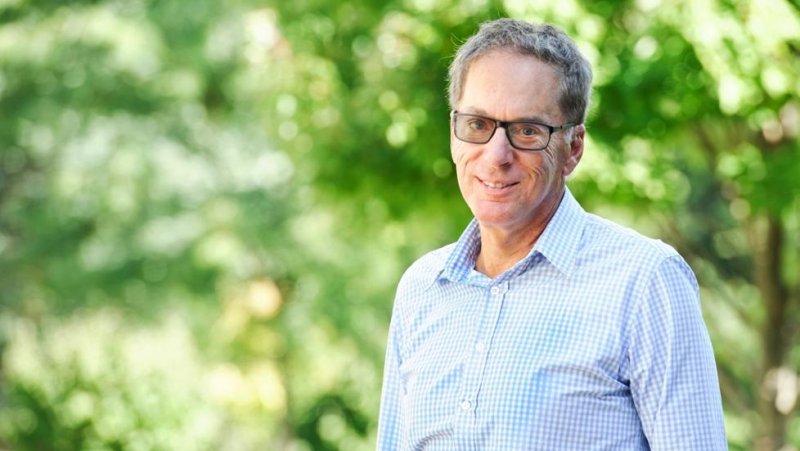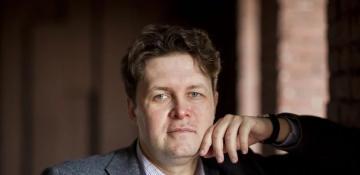
News.Az interviews Dennis Sammut, executive director of LINKS, the London Information Network on Conflicts and State-Building.
You participated in the round table discussion on the topic “The Corfu Process, European Security and the Resolution of Conflicts in the South Caucasus” in Athens. How do you think the Corfu Process might influence the Karabakh settlement?
The war between Georgia and Russia last year reminded people that many problems on the European continent remain unresolved. During the Greek Chairmanship of the OSCE this year a new initiative was launched. It is called the “Corfu Process” because it was launched at a meeting on the island in June. This process enables the governments of the 56 member states to discuss and hopefully come to a decision on many issues important for the future peace and security of our continent.
I have always argued that the Karabakh conflict is best solved in the context of a wider security framework in the Caucasus region. The Corfu Process has the potential to offer this context. However this is a long and difficult process. The OSCE Ministerial Meeting which has just ended in Athens has taken some important steps so we can say that the journey has started.
What was the purpose of the Karabakh report published by LINKS on 1 December?
LINKS decided that this was the right time to issue a report on Karabakh that would help inform both where we are with the efforts to resolve the conflict, but also more importantly what we feel are the major steps that need to be taken. The timing is very important because we feel that there is now both an opportunity which must not be missed, and a danger that if this opportunity is not taken than it may not reappear for a long time.
Could you briefly tell us about the main points of the report?
The process to resolve the Karabakh conflict is entering a new phase. 2009 has seen six meetings between the presidents of Armenia and Azerbaijan and even usually sceptical diplomats are now expressing cautious optimism. With an agreement apparently almost within reach the two sides, with the help of the international community, need to find the courage and political will to overcome the remaining sticking points – including a formula on how to deal with defining the eventual, final status of Nagorno-Karabakh.
However, in the report we also have a word of caution. An agreement in the next weeks will not be the end of the story. There is a lot of work to be done by both governments, and by the international community for an agreement on paper to be turned into a proper peace process, not least to help ensure that the ownership of such an agreement does not remain a monopoly of a tiny political elite but is shared within the wider community on both sides.
So the report makes practical suggestions: to the sides in the conflict the report recommends the intensification of the domestic debate in order to allow a national consensus in favour of a peaceful resolution to the conflict to emerge. Some say that there is already a national consensus in both Armenia and Azerbaijan, but in truth this is a consensus based on slogans and unattainable maximalist positions. We are very far away from having a consensus for peace. Here politicians of all parties and leaders of society must assume their responsibility.
To the international community we say that it must do more to help the sides resolve the conflict. Crucially we say that support for the work of the Minsk Group should not be an excuse for doing nothing else! Whilst the first responsibility for solving the Karabakh conflict is with the governments of Armenia and Azerbaijan the international community has responsibilities too and it needs to show a new commitment to this end.
President Aliev stated before the meeting with President Sargsyan that there was a possibility of a new war for Karabakh if the negotiations in Munich fail. What should be done to prevent a new war?
War will not be a solution. It will just make the problem worse. It is now time for the international community to speak with one voice and in more robust tones to both sides. Some messages that have been transmitted before, but in cautious diplomatic language need to be repeated in clearer terms and without ambiguity in such a way that not only the leaderships, but also the populations of the two countries, will understand clearly. Armenia needs to be told that the continued occupation of the Azerbaijani territories around Nagorno-Karabakh is neither acceptable nor sustainable. Azerbaijan must be told that any attempt or talk of regaining these territories by force without a UN Security Council resolution will bring Azerbaijan into direct confrontation with the international community. Both sides must be reminded of the right of all refugees and IDPs to return to their homes in safe and dignified conditions.
The international community has throughout the whole period when the search for a solution to the Karabakh problem was ongoing, largely held Armenia and Azerbaijan responsible for finding a solution to it. In doing so it has opened itself to criticism and cynicism amongst both the Armenian and the Azerbaijani communities who see this as a means through which the international community was abrogating its responsibility.
In this important moment in the negotiations the international community must show that it also is willing to carry responsibility by engaging more, by showing that a Karabakh solution is a priority and by offering new frameworks from which a mutually acceptable solution can emerge. This will be particularly important when in the future we reach the point where the final status of Karabakh is being discussed. It is not realistic to expect Armenia and Azerbaijan on their own to reconcile the principles of territorial integrity and of self determination, which some argue are contradictory. This will need an international effort. Whilst that is being done the international community must also find ways in which to ensure that key stakeholders, such as the de facto authorities in Nagorno Karabakh and representatives of the displaced, are engaged with properly.
And finally, what are the perspectives for an early settlement of the Karabakh problem?
The process to resolve the Karabakh conflict is entering a new phase. The continuation of the process in the present mode is no longer sustainable. We have reached the end of the beginning. If the present negotiating process within the framework of the OSCE Minsk process collapses, it will take years for an alternative to emerge and to reach the point where we are today. This scenario must be avoided at all costs. The alternative, however, is not stalemate but progress.
The last steps are needed to move the process to a qualitatively improved level, enabling changes on the ground to take place and opening the way for a final solution. This objective is now within reach and this opportunity must not be squandered.
Leyla Tagiyeva
News.Az