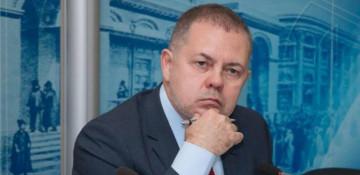
Ali Aliyev
Preparations are afoot for the parliamentary elections to be held in Azerbaijan this November. What's the place of the Azadlig bloc and the Party for Citizenship and Development in this?
Let’s start with our party - the Party for Citizens and Development. We set the 2010 parliamentary elections as our priority in 2006. And since the start of this year we have concentrated on preparing for the elections and are now working hard on determining potential candidates who are willing to stand in the elections on behalf of the party. At the last session of the council of chairmen of the Azadlig bloc we made serious progress in our discussions. If you remember, a month and a half ago we suspended our discussions and resumed them last week. We have been defining the format of our election bloc and have found answers to our questions, including difficult questions about whom we may join in creating the election bloc and the form of cooperation amongst opposition parties and election blocs. We also have a clearer outline for our election bloc, related to the forms of cooperation with other opposition election blocs.
We have shifted the burden of discussions to the parties. This week we will probably sum up all the internal party discussions at the council of chairmen of the Azadlig bloc and define the contours of our election bloc. We should come to this meeting with the results of the negotiations that should have been held in the parties, which means we have already determined candidates for our election bloc. During the period between the completion of the discussions in the parties and the conduct of the meeting of the Azadlig bloc chairmen, we are planning to discuss definite issues with our potential colleagues in the election bloc. Meanwhile, at the next session of the Azadlig bloc chairmen we will take decisions on our election bloc. Probably, we will already discuss the list of candidates from the Azadlig bloc and then make a single list from our election bloc. These issues are now on the agenda and probably we will settle most of the issues this week.
Will the Azadlig bloc and the planned election bloc have qualitative and quantitative differences?
Yes, yes of course, these will be different formats. We want to preserve our political bloc as we think it has a long life span. And, probably, we will create the election bloc on the basis of our Azadlig bloc. Certainly, this bloc will be strengthened by parties and public organizations. I do not want to specify anything, as no overall decision has been taken yet, but on the whole we know who we will be negotiating with to create our election bloc.
Can you say exactly how many 'additional' members will join the election bloc alongside the three Azadlig parties?
I would like to say that when we last discussed our virtual election bloc, including its format, we decided to go for quality rather than quantity. We want our election bloc to be a serious union, as it is based on the principles of the Azadlig political bloc. We will primarily try to attract serious organizations and politicians. Therefore, we will not talk about the number of parties and public organizations. Not everyone will agree to create an election bloc with us. At the last session we decided to cooperate with other election blocs.
After we create our election bloc and decide on the list of candidates, we will agree with other election blocs on the participation of opposition candidates in constituencies so as not to split the vote of the protest electorate.
In mid-January, the chairman of the Democratic Party of Azerbaijan, Sardar Jalaloglu, and the head of the Union for Democracy, Mirmahmud Fattayev, proposed an initiative to unite the opposition political parties. Azadlig has recently avoided taking a decision on the proposals to unite, which is probably the result of friction with the Musavat Party. What is the current state of these proposals?
I am going to declare my approach, that is the approach of the Azadlig bloc, to the opposition camp over the parliamentary elections. I think this will answer all the nuances contained in your question.
At the session of council of chairmen we considered all the proposals we have received on cooperation in the parliamentary elections. And we came to the conclusion that Azadlig will establish its election bloc. We see cooperation amongst the opposition as a phased process. This means that we must first define our election bloc, which I mentioned earlier. Afterwards, we will decide on our common candidates inside our election bloc. After the other opposition parties have decided on their election blocs, we will create a working group or coordination commission to prepare a single list [of candidates] from the opposition election blocs. Time will tell whether we can achieve our intentions. We will not nominate our relations on parties, we will create our election bloc.
I don't know whom the parties you mentioned will contest the elections with, but as for us, we will further coordinate these issues with them, if, that is, they agree. I would like to say here that the coordination of opposition candidates in constituencies is very important for both sides. This is a very important issue. If we come to a single opinion, we will look for mechanisms and ways to settle on single candidates from the opposition.
It turns out that the opposition will contest the elections in several election blocs. Does this mean there will be no single opposition election bloc?
No. There will be no single election bloc from the opposition. I think this is already in the past. But we want to seize the missed chances by coordinating our candidates on the ground. It will certainly depend on our wishes and political will.
Is your election bloc going to cover all constituencies?
Naturally, our registered candidates must cover at least half of all constituencies throughout Azerbaijan, that is, more than 60. Of course, this is our minimum so that we can campaign as an election bloc, with free TV and radio air time and newspaper advertising, financed from the state budget, as envisaged in the Electoral Code. This is our minimum. Meanwhile, the maximum is to field candidates in all constituencies which we should do.
Musavat Party representative Arif Hajili said recently that Musavat may hold rallies to help create a democratic atmosphere in the country. Are you planning anything similar?
I would like to say that along with the coordination of candidates in constituencies and the creation of a single list from the opposition, there are very many issues that demand cooperation from the opposition. This also relates to the issue of changes in the election law in Azerbaijan. Of course, such major issues as the format of election commissions, the dates of the election campaign, the mechanisms for filing a complaint and adopting decisions by the courts must be changed. That is, there are many technical issues that must be changed in the Election Code. We need to pool our potential. The law on freedom of assembly does not work in the country, which means that we should get over this ban and taboo and exercise our constitutional rights, ensuring that the authorities do not prevent such actions. There are problems in the sphere of communication with the public, that is, primarily, access to electronic media and, certainly, public television which is almost prohibited to us.
There are other issues that we should settle together. And I think that the coordination commission that might be created amongst the election blocs should coordinate common actions, reveal common problems and, certainly, work to tackle them. I do not know whether these problems will be understood by the other election blocs, but this is what we, as the Azadlig bloc today and our election bloc tomorrow, think.
And finally, the opposition does not seem to be acting in concert ahead of the elections. Can the opposition put up real competition to the New Azerbaijan Party in these conditions?
The administrative resources today are great, so it is important for the opposition representatives to assess the situation objectively. Certainly, the international situation around Azerbaijan is constantly, though slowly, changing. I would like to mention the article that was published in the Washington Post last week [the article reported that property worth $44m in Dubai was registered to a boy of the same age and name as the Azerbaijani president's son]. This is a serious sign to the authorities. But time will tell what decision the world community will take on the parliamentary elections in Azerbaijan. However, the world social climate around Azerbaijan leaves much to be desired.
I think if we are able to accumulate our opportunities, if we could help the Azerbaijani community to believe that everything can be changed and if today’s protest electorate believes the slogans of the Azerbaijani opposition, certainly, we will be able to settle some issues. But if we fail to agree and coordinate our actions between the opposition election blocs and to rally the Azerbaijani community around the parliamentary elections, today’s realities will not be in our favour. If we believe in our power and coordinate our actions, I think much can be changed.
Leyla Tagiyeva
News.Az
Commentary